

WHEELDRIVE – The future of electric vehicles (EVs) is rapidly evolving, driven by breakthroughs in battery safety, intelligent systems, and autonomous driving technologies. At the GAC Innovation Center in Guangzhou, these advancements are no longer concepts they are already being developed and prepared for real-world implementation.
As part of a global automotive exploration aligned with the Beijing Auto Show 2026, a series of visits to GAC’s key facilities offered a comprehensive look into how next-generation mobility is being shaped. The journey covered the GAC Technology Museum, GAC Trumpchi Factory, and GAC AION Factory each representing a critical pillar of GAC’s innovation ecosystem, from research and development to large-scale production.
At the GAC Technology Museum, visitors were introduced to the company’s technological evolution, including its long-standing joint ventures with GAC Honda and GAC Toyota. Among the highlights was the Magazine Battery Technology, a next-generation EV battery safety system engineered to address one of the industry’s most critical challenges: thermal runaway.
This system integrates heat-resistant structures, advanced cooling mechanisms, and real-time monitoring via the Battery Management System (BMS). Building on this foundation, Magazine Battery Technology 2.0 introduces even higher safety standards through enhanced material stability, multi-layer cooling protection, and a self fire-extinguishing feature designed to significantly reduce fire risks.

Beyond battery innovation, GAC is also accelerating the development of intelligent mobility through its ADiGO (AI Driving Intelligent System) ecosystem. A key component, ADiGO PILOT, enables advanced autonomous driving capabilities, including robotaxi technology and intelligent parking systems such as Autonomous Valet Parking (AVP) and Home Parking Assist (HPA). These features aim to deliver a safer, smarter, and more convenient driving experience.
The exploration continued at the GAC Trumpchi Factory, where internal combustion engine (ICE), hybrid (HEV), and plug-in hybrid (PHEV) vehicles are produced using an advanced integrated manufacturing system. The facility demonstrates high levels of automation, including precision stamping, machine vision-based adaptive welding, advanced painting processes for durability, and flexible assembly lines that enhance efficiency and scalability.
GAC’s electrification strategy is further reinforced through its powertrain innovations, particularly hybrid systems equipped with dual-motor multi-gear technology. This approach improves both performance and energy efficiency, positioning hybrid vehicles as a key bridge in the transition toward full electrification.
At the GAC AION Factory, the focus shifts fully to electric mobility and the future of battery technology. The facility showcases smart manufacturing systems designed specifically for EV production, along with ongoing research into next-generation solutions such as solid-state batteries. These batteries offer the potential for higher energy density, faster charging, and improved safety compared to conventional lithium-ion batteries.
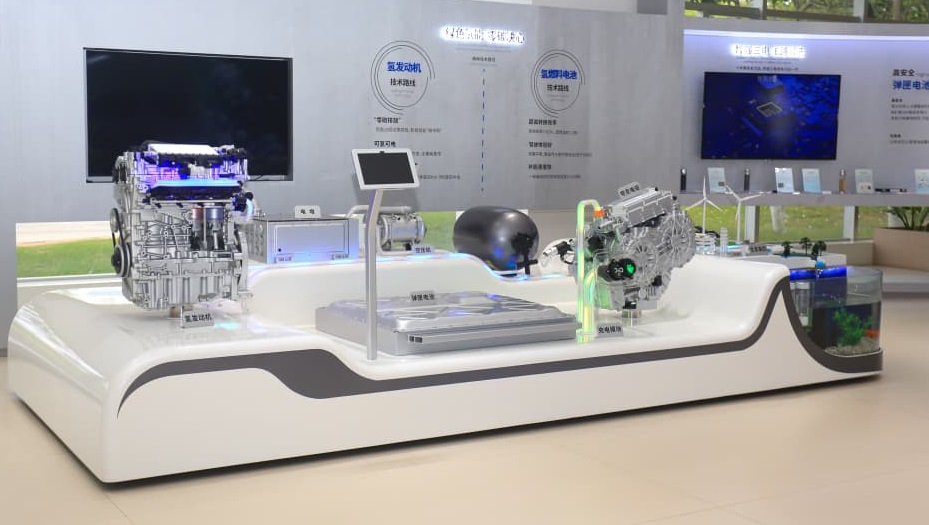
In addition, GAC continues to explore new battery materials and architectures to further enhance reliability and performance. These efforts complement the Magazine Battery platform and reflect a broader commitment to building safer and more sustainable EV ecosystems.
Together, these facilities illustrate how GAC integrates innovation, engineering, and production into a unified automotive ecosystem. From early-stage research to mass manufacturing, the company’s approach aligns with its global strategy, “In Local, For Local,” ensuring that technological advancements can be adapted to different markets and mobility needs.
As the automotive industry moves toward a more sustainable and intelligent future, developments at the GAC Innovation Center in Guangzhou provide a clear indication of what’s next for electric vehicles: safer batteries, smarter systems, and increasingly autonomous mobility solutions.